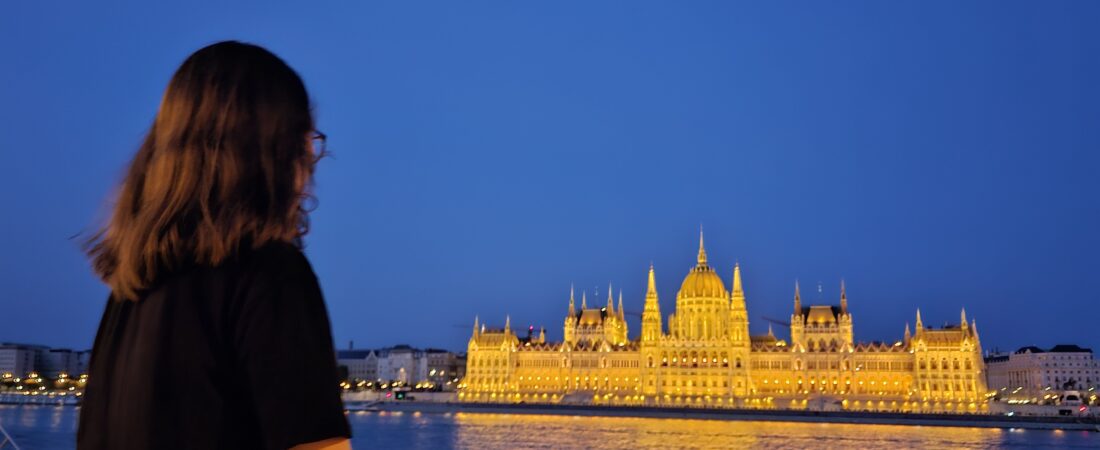
This Budapest travel guide covers everything you need for your first trip — from thermal baths to hidden viewpoints, honest restaurant picks, and how to do it on a budget.
I went to Budapest because of Martin Garrix.
Not the most romantic origin story for falling in love with a city, but it’s the truth. Music has always been a serious thing for me — and when I saw the Sziget Festival lineup, the decision was made in seconds. I planned a two-month solo trip across Europe with one single goal: get to Budapest in time for the festival.
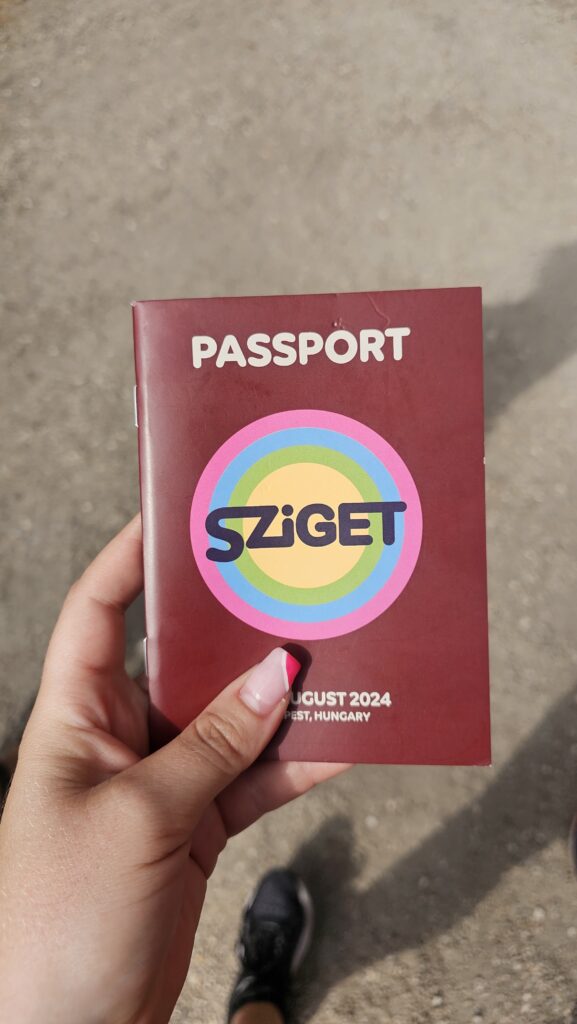
The planning was simple because I barely planned at all. I opened Skyscanner, searched for the cheapest flight from Lisbon to anywhere, and ended up in Amsterdam — a city I’d never been to. Hostels were expensive, so I had the apparently crazy idea of trying couchsurfing — staying with strangers who offer their couch or a spare room. I spent two or three weeks in the Netherlands without spending a single euro on accommodation.
Some friends cheered me on. One told me to sell my ticket and stay home.
I’m very glad I didn’t listen to that friend.
That trip changed something in me. Budapest was a big part of that. I went for a festival and ended up coming back five times — including a trip in January 2026 with one of my best friends. When a city pulls you back like that, you stop needing to explain why.
Note: If you want to know how the Sziget experience really went — camping alone for the first time, the anxiety on the K-Bridge, making friends out of nowhere — I have a full article just about that.
Quick Facts
| When I went | August (35°C+, brutal heat) + multiple trips in 2025 |
| Budget | 150–250€ for 3 days |
| Best time to visit | May–June or September |
| Language | Hungarian (English works fine in tourist areas) |
| Currency | Forint (HUF) — use a Revolut card |
A Bit of History (Because It Makes the City Make Sense)
You don’t need to be a history buff to enjoy Budapest — but knowing a little about what happened here makes everything you see feel more layered.
Budapest is actually three cities merged into one. Óbuda, Buda, and Pest were three separate cities until 1873, when they were unified into Budapest. Buda sits on the hilly west bank of the Danube; Pest is the flat, urban east side where most of the city life happens.
The Romans were here first — the area was called Aquincum, and you can still visit Roman ruins in the city today.
The Ottomans ruled Budapest for nearly 150 years (1541–1686), after Sultan Suleiman I defeated Hungary at the Battle of Mohács. Here’s something fascinating: those thermal baths everyone loves? The Ottomans built them. They transformed the city’s natural hot springs into a bathing culture that Budapest still lives by today.
The Habsburgs took over after 1686 and rebuilt much of the city in Baroque and Neoclassical style. The 1867 Austro-Hungarian Compromise gave Hungary significant autonomy, triggering a golden age of rapid development. The Parliament building — the one that made me stop breathing the first time I saw it — was built during this era, completed in 1904.
The 20th century was brutal. Hungary lost two-thirds of its territory after WWI. WWII left the city heavily damaged. Then came Soviet rule and the Warsaw Pact. The 1956 anti-Soviet uprising was crushed, and Prime Minister Imre Nagy was executed. You can feel traces of all of this at the House of Terror museum — one of the most haunting and important places I’ve ever visited.
Hungary only became a democratic republic in 1989. The city you’re walking around today is less than 40 years into its current chapter.
DAY 1: Arrival & Parliament Area
Morning/Afternoon — Arrival
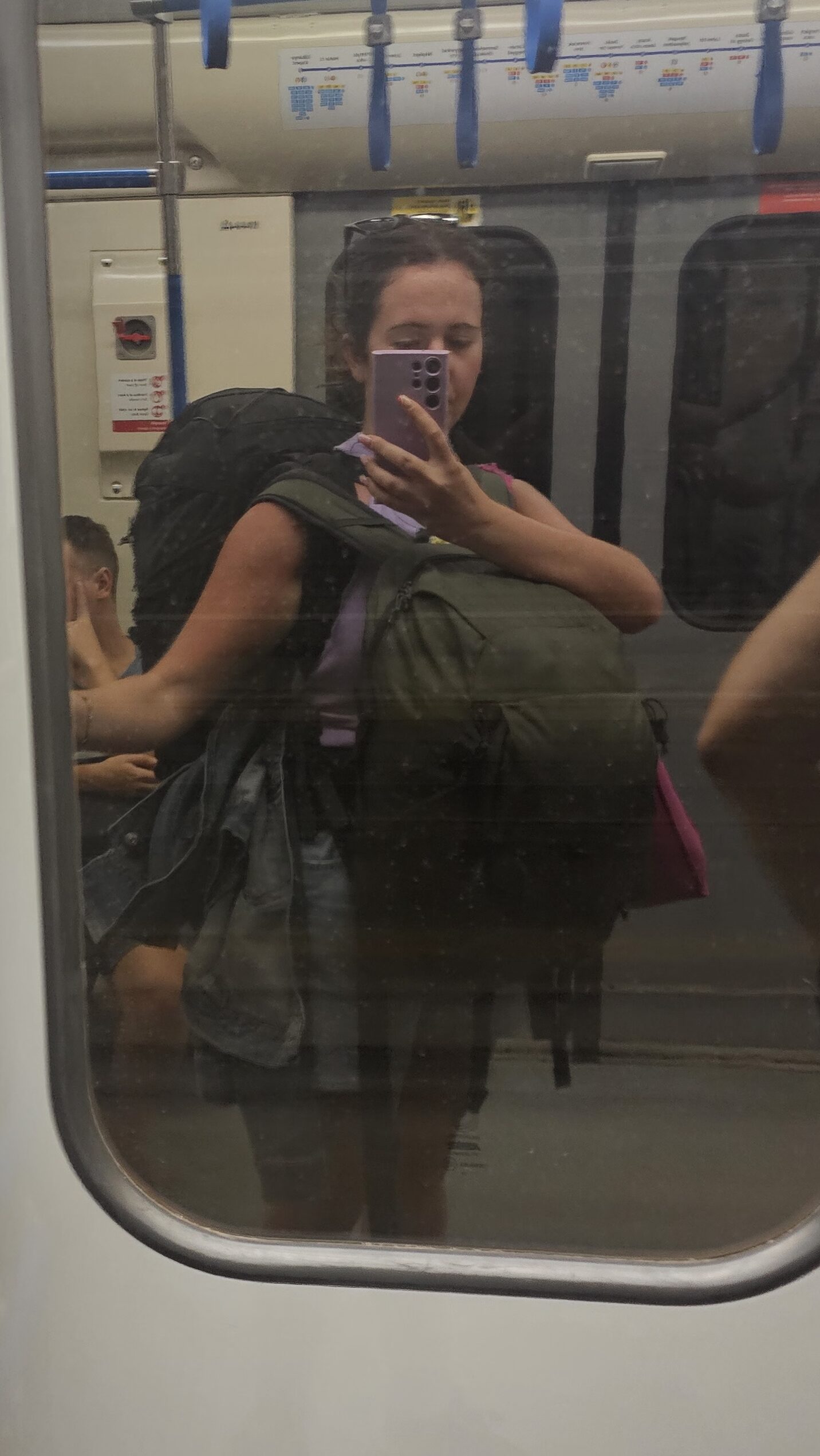
When I arrived in Budapest for the first time, I was already carrying a month of travel on my back — plus an absurdly heavy backpack with a tent, sleeping bag, and camping mat I’d bought two days earlier. August in Budapest is no joke: 35°C+, no mercy.
Check in, drop your bags, drink water. Walk around the neighbourhood to get your bearings. If you arrive early and your room isn’t ready, most hostels will store your luggage — just ask.
Late Afternoon — Hungarian Parliament (exterior, FREE)
The Parliament is one of the most beautiful things I’ve ever seen while travelling. And I’ve seen quite a lot at this point.
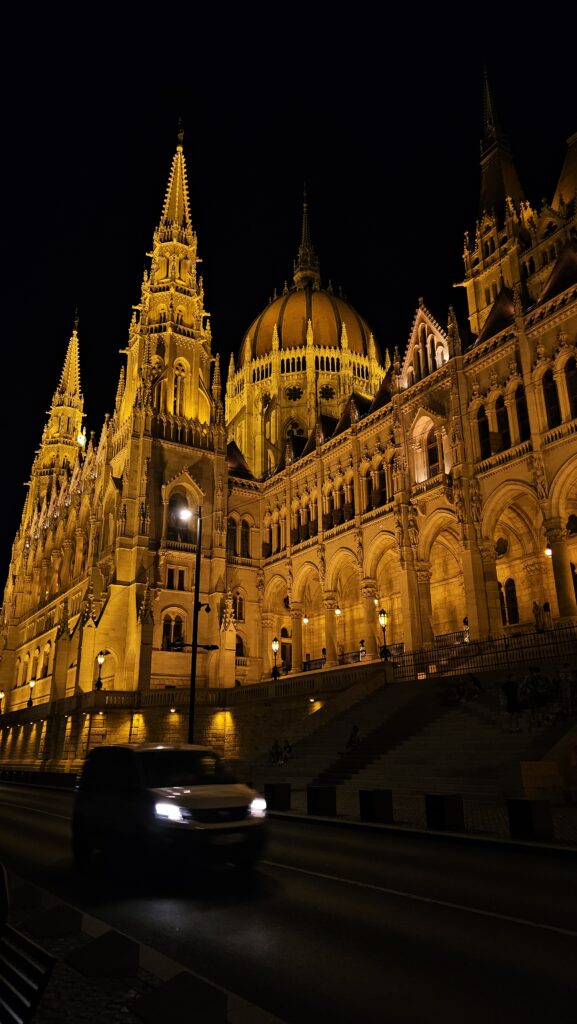
Go in the late afternoon, during golden hour before sunset. Walk along the Danube riverfront. Sit down. Stay a while.
What I love most is that it’s not a place where people take a photo and leave — people stay. They sit, they talk, they think. One time I was there I saw a group of girls singing happy birthday. Another time I was there by myself, writing, eating chocolate, realising this was a very chill city. At night, when the building lights up, it’s even more stunning than during the day.
The exterior is completely free. If you’d like to see the stunning interior, you’ll need to book a guided tour. Tickets can sell out quickly, especially during peak season.
💡 View Parliament tour availability (use code SASHAA5 for 5% off).
Evening — Dinner at Paprika Vendéglő
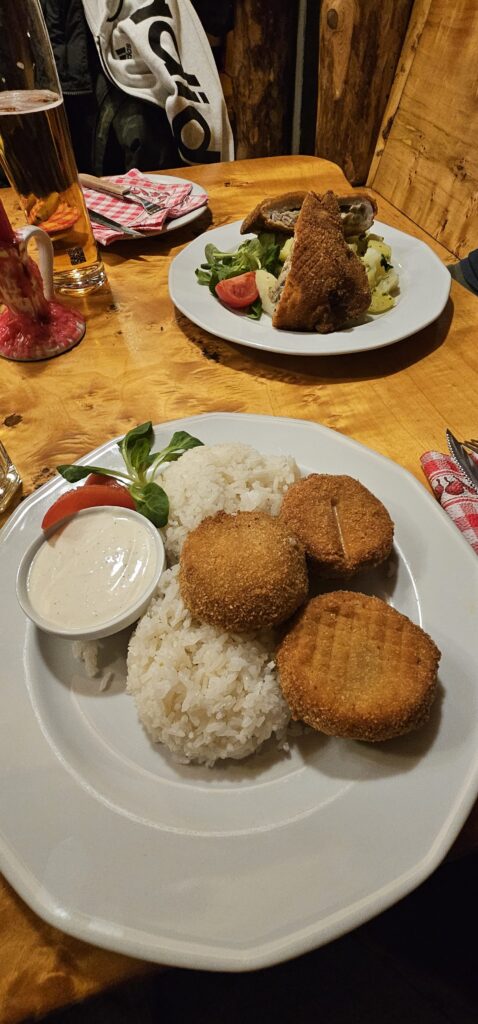
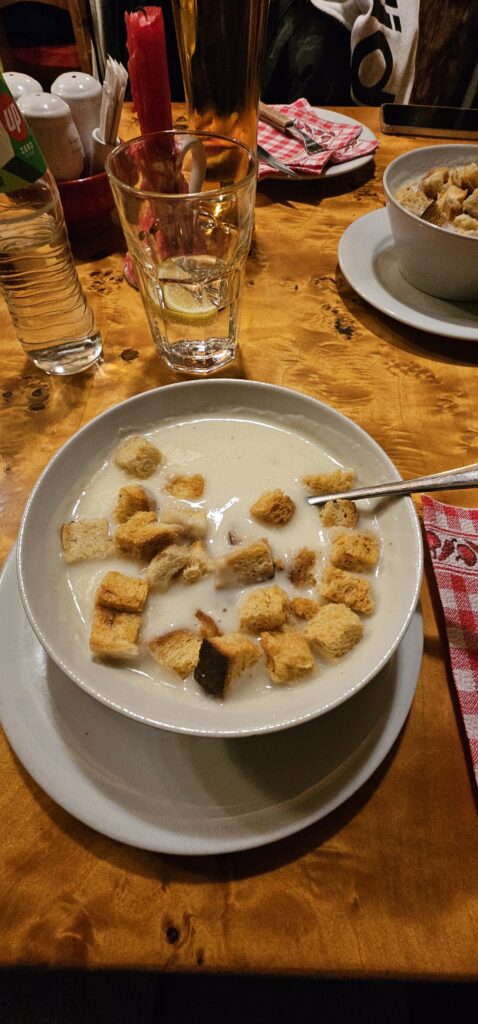
I’ve been to this restaurant more times than I can count. It was with a friend that I discovered what it feels like to walk in and have them remember the name of whoever made the reservation. A fully packed restaurant, mostly locals — always the best sign you’re in the right place.
The interior is vintage — not the forced vintage of places trying to have an aesthetic, but the kind of place that feels like it’s always been exactly this way. The staff are genuinely warm and helpful.
Eat the mushrooms. Eat the garlic soup. You’re welcome.
⚠️ Book ahead — they speak English, just call. Completely worth it.
DAY 2: Thermal Baths & The Buda Side
Morning — Thermal Baths
Budapest’s thermal bath scene looks a little different right now than most guides will tell you. The Gellért — the one I went to and loved — closed in October 2025 for a major renovation and won’t reopen until 2028. It’s a 51€ million transformation that will restore the Art Nouveau interiors and add a new wellness area and panoramic sauna.
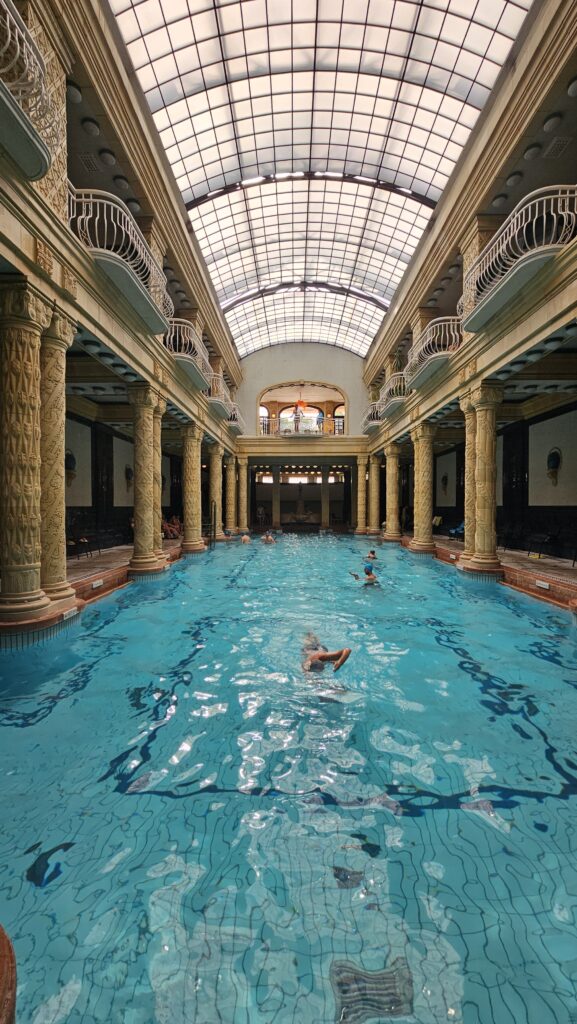
My recommendation for 2026: Rudas Thermal Baths (~28–32€)
Rudas is having a moment. With Gellért closed, it’s become the only historic bath on the Buda side of the Danube — and honestly, it deserves all the attention it’s getting.
The history alone is remarkable: the central octagonal pool dates back to the 16th century, built during Ottoman rule. Soaking in water that people have been bathing in for 500 years is a genuinely surreal feeling. The original dome filters light through coloured glass onto the thermal pools below — stunning in a completely different way from Gellért.
But the real surprise is the rooftop panorama pool. Hot thermal water, open sky, and views over the Danube and the illuminated city. If you go near sunset, bring a waterproof phone case — the photos are worth it.
Good to know:
- Mixed bathing (men and women together) on weekends and Thursday/Friday evenings
- Women-only sessions on Tuesdays
- Night bathing on Friday nights (10pm–3am) — book online only
- Children under 14 not allowed (new regulation since August 2025)
- 20% discount with Budapest Card
What you must bring:
- Swimsuit
- Flip-flops (bring your own — renting costs a lot)
- Towel (renting is expensive here — bring your own)
💡 Book Rudas online here to guarantee entry
Afternoon — Buda Castle & Fisherman’s Bastion
After a relaxed morning at the baths, cross to the Buda side:
Walk across Chain Bridge — about 20 minutes, beautiful views of the Danube. The Buda Castle area has cobblestone streets, historic buildings, and panoramic views over Pest. Fisherman’s Bastion has an upper terrace for 3€ — but the lower level is free and honestly has the same views. My honest take: save the 3€.
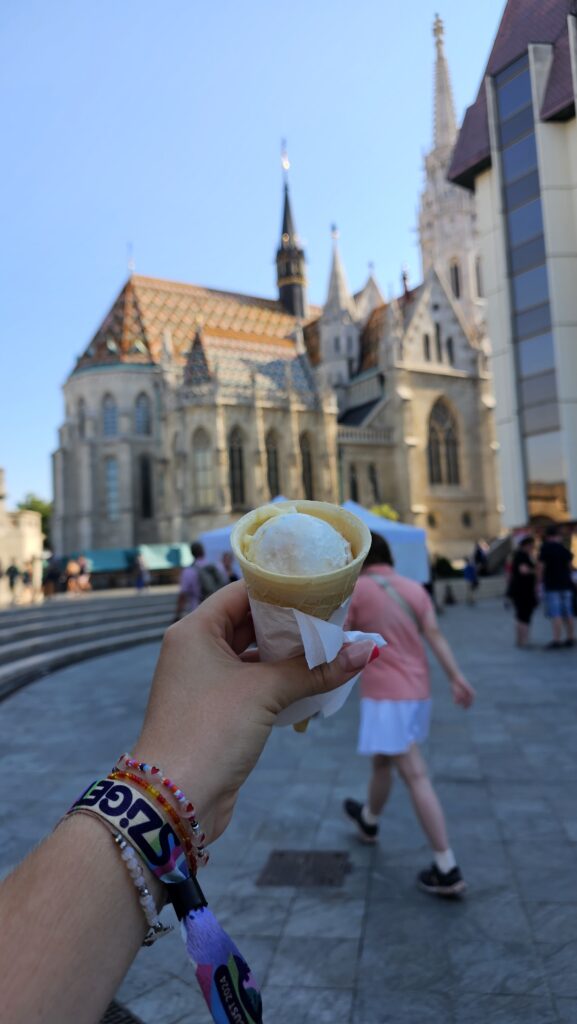
Evening — Street Food
- Kürtőskalács (Chimney Cake): sweet, crunchy, warm. 3–5€ at street stalls around the city
- Lángos: fried dough with toppings. Get cheese, sour cream, and garlic. 3–6€
DAY 3: Jewish Quarter & Free Exploration
Morning — Two Options
Option A: Jewish Quarter & Great Synagogue
The Dohány Street Synagogue is the largest in Europe. The Moorish architecture and the Holocaust memorial are both powerful and worth your time. This neighbourhood has its own energy — layers of history on every street.
Option B: Margaret Island
A peaceful park in the middle of the Danube. Perfect for a morning walk or bike rental. Japanese garden, musical fountain, ruins. Free to enter and completely different from the rest of the city.
Afternoon — Central Market Hall
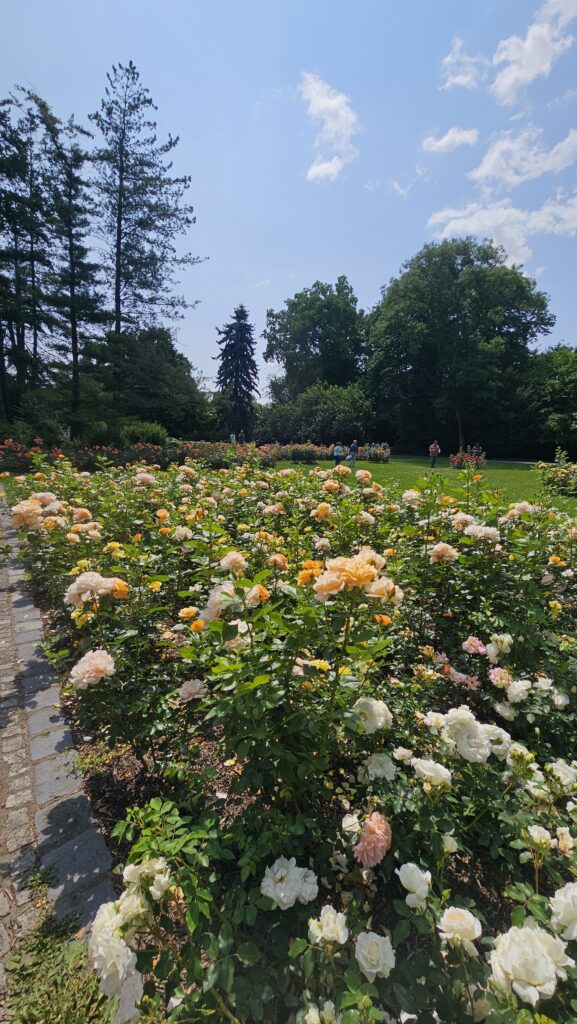
Don’t skip this. The Central Market Hall (Nagycsarnok) is genuinely beautiful — a grand 19th-century iron-and-brick market hall with local produce, paprika in every variety imaginable, and traditional Hungarian food on the upper floor. It’s touristy, yes, but it’s also a real market that locals use. Worth at least an hour.
Still On My List
The Danube night cruise. I still haven’t done it — but next time it’s the first thing I book. Seeing the Parliament lit up from the water must be one of the most beautiful experiences this city offers.
💡 Check availability here — I’m finally booking this on my next trip, and use the code SASHAA5 for 5% off
Budapest Museums Worth Visiting
House of Terror ⭐ (Must-visit)
This is one of the most powerful museums I’ve ever been to. The building itself was used as headquarters by both the Nazi Arrow Cross and then the Soviet secret police. It documents Hungary’s occupation under both totalitarian regimes. It’s dark, it’s haunting, and it puts everything you see in the city into context. Don’t skip it.
💡Book skip-the-line tickets here — queues can get long
Hungarian National Museum
The full story of Hungary from ancient times to the present. Good permanent collection covering everything from Magyar origins to the 1956 uprising.
💡Check opening hours and tickets here
Museum of Fine Arts (Heroes’ Square)
One of the largest art collections in Central Europe — European masters, Egyptian antiquities, impressive temporary exhibitions. The building itself, on Heroes’ Square, is stunning.
💡Explore the full collection here
Memento Park (Communist Statue Park)
An open-air museum outside the city where Budapest moved all the Communist-era statues that were pulled down after 1989. Giant Lenin, Stalin’s boots, Soviet heroes. Surreal and fascinating.
Free & Discount Days — Save Money on Museums
Hungarian National Holidays — Everything Free On March 15th (Revolution Day), August 20th (St. Stephen’s Day), and October 23rd (Republic Day), entry to all state museums in Budapest is free for everyone. If your trip overlaps with any of these dates, plan your museum days accordingly.
Always Free (with conditions):
- Children under 6: free year-round
- Seniors over 70: free year-round
- EU citizens aged 6–26 and 62–70: free at many state museums (bring your passport or ID)
- Teachers from EEA countries with valid press pass: free
Budapest Card — Worth It? If you’re planning to see several museums and use public transport heavily, the Budapest Card can save you money. It includes:
- Unlimited public transport (including from the airport)
- Free entry to 22 museums and landmarks including the National Museum, National Gallery, and Buda Castle
- One free thermal bath at St. Lukács
- One free Danube river cruise
- 10–50% discounts at major attractions
- Discounts at 12+ restaurants
💡 Check Budapest Card prices and buy here, and use the code SASHAA5 for 5% off
Getting Around Budapest
Airport to City Centre
Option 1: Bus 100E (BEST VALUE) ⭐ Direct to city centre (Deák Ferenc tér), every 10–15 minutes, 30–40 minute journey, 4,50€. Buy tickets on the BudapestGO app.
Option 2: Taxi 25–30€ to the city centre. Always use Bolt or FreeNow app — cheaper and safer than flagging a taxi on the street.
Option 3: Public Transport (cheapest) Bus 200E to Kőbánya-Kispest metro, then Metro M3. About €3, but 50–60 minutes — not ideal with heavy luggage.
Getting Around the City
The monthly pass was one of the best decisions I made. It’s extremely affordable and gives you access to trains between cities too — not just Budapest transport. I met locals on the train, which is always one of my favourite parts of travelling.
Pass options:
- 24 hours: ~5€
- 72 hours: ~13€
- Monthly: ~35€ (worth it for a week or more)
Budapest is very walkable — especially the Pest side, which is completely flat. Walk as much as you can. You see more and spend less.
Where to Stay in Budapest
I stayed in hostels in the city centre — solo travel, budget mode.
Budget:
- Dorm beds: 15–25€/night
- Private rooms: 30–50€/night
- Airbnb: 40–70€/night
Ruin Bars
Budapest’s ruin bars are one of the most unique things about the city — bars built inside abandoned, crumbling buildings with a completely intentional, chaotic aesthetic. The most famous is Szimpla Kert. I haven’t been yet, but it’s at the top of my list for next time. Everyone who goes to Budapest mentions them — rarely negatively.
About the Hungarians
They can seem closed-off at first — not a lot of smiling on the street. But if you need help and ask, people are genuinely kind and willing to help. Don’t confuse reserve with coldness.
A few words of Hungarian go a long way. People appreciate the effort even when the pronunciation is a disaster.
Travel Gear — First Trip? Get Everything You Need
If this is your first big solo trip, don’t show up unprepared. I learned this the hard way — I had to buy a whole new backpack, a tent, a sleeping bag, and a camping mat mid-trip because I hadn’t planned properly.
Save yourself the stress. Get everything sorted before you leave.
The basics you don’t want to forget:
- A proper travel backpack (I use a Decathlon 50L)
- Flip-flops (mandatory for thermal baths — or you pay to rent them every time)
- Microfibre towel (lightweight, dries fast)
- Reusable water bottle (tap water in Budapest is safe to drink)
- Universal travel adapter (Europe uses Type C/F plugs)
- Power bank (you’ll use your phone constantly for maps and photos)
- Basic first aid kit
- SPF 50 sunscreen if you’re going in summer (the heat is serious)
Travel Insurance (Please Read This)
I’ll be direct: my appendix burst during my two-month trip across Europe. I had emergency surgery in Montenegro.
I’m not trying to be dramatic, but I’m also not going to minimise it — it was scary, it was serious, and it happened in the middle of a solo trip. Travel insurance isn’t something we think about when we’re planning and everything is going fine. It’s something we think about when we need it.
I never travel without it now.
What I use:
GENKI — perfect for long trips or multi-country travel
- Month-to-month coverage, no long-term commitment
- Works in 175+ countries
- Telemedicine included
- ~€50–60/month
EU Citizens: Bring your European Health Insurance Card (EHIC). It covers emergency treatment for free in other EU countries — but it’s not a replacement for proper travel insurance. Limited coverage, no repatriation.
Essential Apps
| App | What for |
|---|---|
| BudapestGO | Public transport — buy digital tickets |
| Google Maps | Navigation — download the offline map before you go |
| Bolt | Taxis — much cheaper than street taxis |
| Revolut | Best exchange rates, no ATM fees |
| Google Translate | Download Hungarian for offline use — camera translation for menus is a lifesaver |
| HappyCow | Vegetarian/vegan restaurant finder |
| GetYourGuide | Book activities, tours, skip-the-line tickets |
💡 Browse all Budapest activities and tours here, and use code SASHAA5 for 5% off.
Google Maps — All Locations Saved
I’ve created a custom Google Map with every location mentioned in this guide — restaurants, thermal baths, viewpoints, museums, everything.
📍 Open my Budapest Google Map here
How to use it: open on your phone while walking around, tap any pin for directions. Much easier than searching for everything individually.
Scams to Avoid
- Bars with no visible prices: if someone on the street invites you to a bar, check the prices before you sit down
- Street taxis: always use Bolt or FreeNow instead
- Street currency exchange booths: terrible rates — use your card or an ATM
- Tourist-area menus: always confirm prices before ordering
- Fake ticket inspectors: real ones have official ID badges — never hand over cash on the street
Best Time to Visit Budapest
🥇 May–June: Perfect weather (20–25°C), not yet overcrowded, reasonable prices, long days
🥈 September–October: Mild temperatures, fewer tourists than summer, wine harvest season for day trips
🥉 December: Christmas markets, magical atmosphere, thermal baths steaming in the cold (incredible experience)
Avoid: July–August if you hate heat — 35°C+ and very crowded. I went in August and the city is incredible, but the heat is brutal. The city gets a 10/10. The temperature gets a 4/10.
Budget Breakdown (3 Days)
| Accommodation (hostel, 3 nights) | 45–75€ |
| Food (20–30€/day) | 60–90€ |
| Gellért Thermal Baths | 20–25€ |
| Transport | 10–15€ |
| Street food + extras | 20–30€ |
| TOTAL | 150–250~€ |
Day Trips from Budapest
If you have extra time:
- Szentendre (20km): charming riverside town, art galleries, Baroque architecture. 45 min by HÉV train, €3–4 return
- Eger (130km): historic castle, wine cellars, try Egri Bikavér (Bull’s Blood wine). 2h by train, €8–12 return
- Lake Balaton (100–130km): largest lake in Central Europe, beach towns, cycling. 1.5–2h by train
- Visegrád + Esztergom: medieval castle ruins and Hungary’s largest basilica, Danube Bend scenery. ~1h, €8–12 return
Useful Hungarian Phrases
Hungarians love when you try — even when the pronunciation is a total disaster.
| English | Hungarian | Pronunciation |
|---|---|---|
| Hello (informal) | Szia | SEE-ah |
| Good day (formal) | Jó napot | YOH NAH-pot |
| Thank you | Köszönöm | KUH-suh-num |
| Please | Kérem | KEH-rem |
| Yes | Igen | EE-gen |
| No | Nem | nem |
| The bill, please | A számlát kérem | AH SAM-laht KEH-rem |
| Cheers! | Egészségedre! | EG-aysh-shay-ged-reh |
| Help! | Segítség! | SHEH-geet-shayg |
Best Viewpoints in Budapest
Budapest is a city made to be seen from above. Here’s my ranking, honest and practical:
🥇 Gellért Hill & the Citadella — BEST VIEW IN THE CITY
This is the one. If you only go to one viewpoint, make it this. From the top you can see everything at once — both sides of the Danube, all the bridges, the Parliament, Buda Castle, St. Stephen’s Basilica. It’s the full picture.
And here’s the big news: the Citadella reopened in April 2026 after 11 years of renovation. It’s been completely transformed — a 6,000m² eco-friendly park inside the fortress walls, a brand new museum about Hungarian freedom fights, a glass pedestrian bridge, a café, and restored walking paths. The Liberty Statue has also been carefully restored and is now accessible up close for the first time in over a decade.
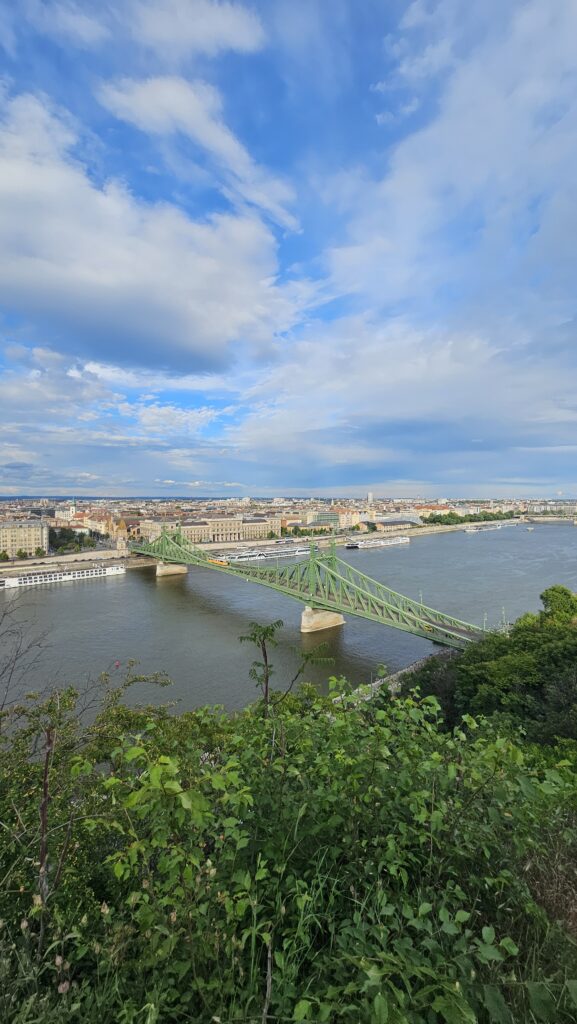
Entry to the park areas is free and open 24/7. The museum inside has a ticket fee — check the official website for current prices.
How to get there: Bus 27 from Móricz Zsigmond körtér (connected to Metro M4). Or walk up — it’s a workout but worth it. Many people take the bus up and walk down to enjoy the views without the uphill struggle.
🥈 Fisherman’s Bastion — Most Iconic View
The classic. Neo-Romanesque towers, perfect view of Parliament and the Danube. Visit at golden hour or sunrise for the best photos and fewest people. Lower level is free — upper terrace costs €3 but it’s the same view.
🥉 St. Stephen’s Basilica Dome — Best View Over Pest
360-degree view right from the heart of the city. You can see the symmetrical boulevards, rooftops, and the distant Buda Hills. 364 steps or take the elevator. Small entry fee.
Margaret Island — More Than Just a Park
Margaret Island is one of those places that surprises people. It’s a large park island in the middle of the Danube — no cars, no rush, completely different energy from the rest of the city.
What’s there: a Japanese garden, ruins of a medieval monastery, a small zoo area, bike and electric cart rentals, and plenty of space to just sit and do nothing.
But the highlight is the Musical Fountain — 154 nozzles choreographed to music, from Hungarian folk songs to international hits. People gather around it and it turns into a kind of spontaneous community picnic. Families, couples, groups of friends, everyone just sitting on the grass together. It has a really special atmosphere.
Fountain schedule: Runs from May to October, hourly from 11am to 9pm. Free. Go in the evening — at night there are also short films projected onto the water mist, which makes it even more magical. The last show of the day is the best one.
Getting there: Tram to Margitsziget/Margit híd stop, then about 6 minutes on foot.
Cafés — The Good, The Beautiful, and the Tourist Trap
New York Café — Skip It (Or Just Peek Inside)
You’ll see it everywhere on social media. Giant queues outside, gorgeous interior, sky-high prices. The architecture is genuinely stunning — gilded ceilings, marble columns, frescoes — but the food is mediocre, the service inconsistent, and there’s an automatic 15% service charge that’s easy to miss on the menu. A coffee costs around €10.
My honest take: walk past, look through the door, take a photo of the exterior. Don’t wait in line and don’t eat there. Your money is much better spent elsewhere.
The Alternative: Párisi Passage Café ⭐
This is what the New York Café wishes it was in terms of experience. Located inside the Párisi Udvar Hotel (a stunning 19th-century arcade building near Ferenciek tere), it has a breathtaking Art Nouveau crystal dome, Moorish arches, stained glass, and an atmosphere that feels genuinely magical — without the circus.
The food is actually good (real Hungarian cuisine with seasonal ingredients), the service gets consistently great reviews, and on weekdays you usually don’t even need a reservation. Much less chaotic, much more enjoyable.
Centrál Grand Café — founded in 1887, beautifully restored, was historically a meeting point for Hungarian writers and intellectuals. Great for a coffee and pastry in a setting with real history. Located near Ferenciek tere.
The Budapest Mini Statues — A City-Wide Scavenger Hunt
This is one of the most charming things about Budapest that most tourists don’t know about. A Hungarian artist scattered dozens of tiny bronze figurines throughout the city — hidden in unexpected places like on ledges, tucked into corners, perched on railings. People find them by chance and stop to take photos.
It’s completely free, completely accidental (the best kind of discovery), and it turns a regular walk into something more fun. Keep your eyes low — they’re small and easy to miss.
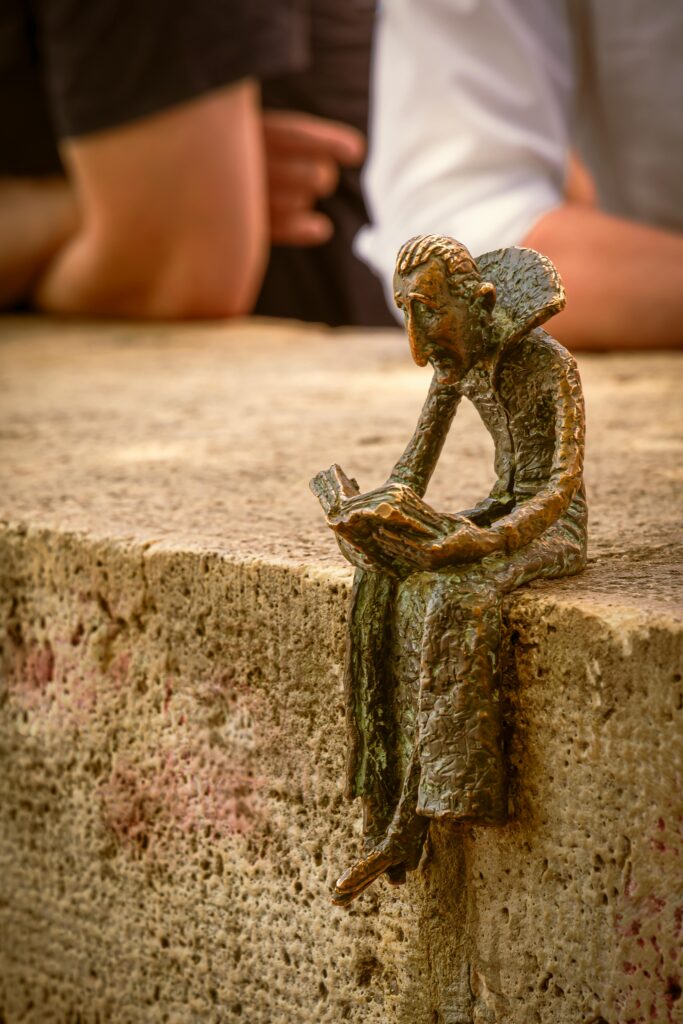
There are maps online showing their locations if you want to hunt them deliberately, but honestly finding one by surprise is better.
Public Transport — Validate Your Ticket. Always.
This sounds obvious but it’s worth saying clearly: always validate your ticket or pass when you board. Budapest has ticket inspectors, they are frequent, and the fines are not small.
It doesn’t matter if you have a pass — you still need to validate it each time you board (except 24/72-hour passes, which you validate once). Inspectors work in plain clothes and in uniform. You will not be able to talk your way out of a fine as a tourist. Just validate and forget about it.
Final Thoughts
Budapest surprised me. I didn’t expect to fall this hard for a city.
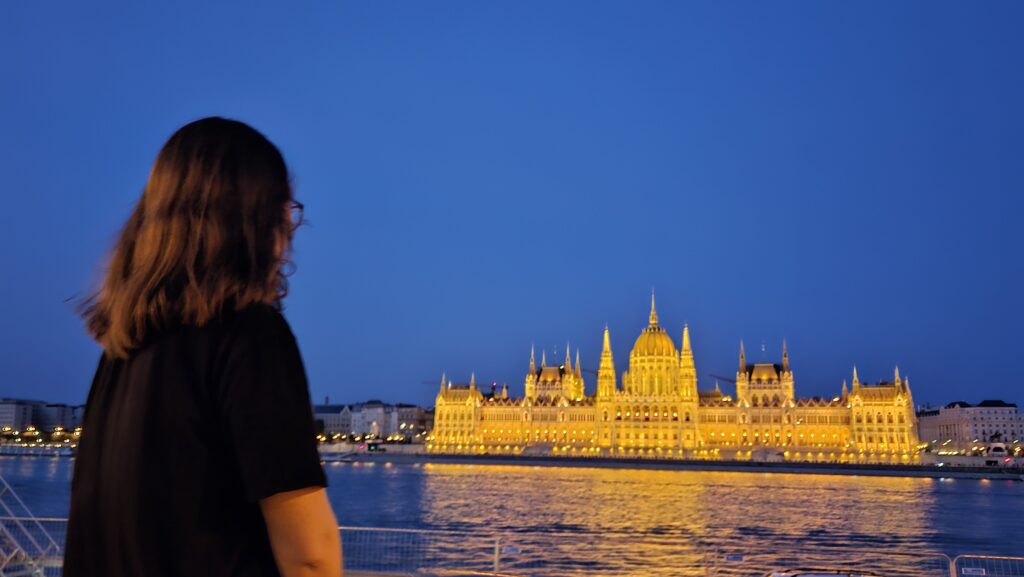
The Parliament at night — one of the most beautiful things I’ve seen while travelling. The thermal baths that somehow make you feel like you’ve travelled back in time. The garlic soup at Paprika that I still think about. The mix of grand architecture and crumbling ruin bars. The fact that you can have an incredible three days without spending a fortune.
I’ve been back five times now. I still haven’t done the Danube night cruise — but I promise this time I will.
If you’re planning your first solo trip, Budapest is an excellent choice. Safe, affordable, beautiful, and full of travellers from all over the world. You’ll get lost in the Jewish Quarter, spend way too long in thermal baths, and probably eat more chimney cakes than you planned. I hope this Budapest travel guide helps you plan!
Hi, I’m Andreia
I create Sisoulnomad: honest solo-travel guides from Europe and beyond. No fake sponsored content — just what I actually use and recommend. Want a real postcard from wherever I am in the world? Join the club. 📮